in situ ◉
text & photography by Jordan Sambogna
in situ ◉
text & photography by Jordan Sambogna
olive branches frame the entrance to Patricia's workspace.
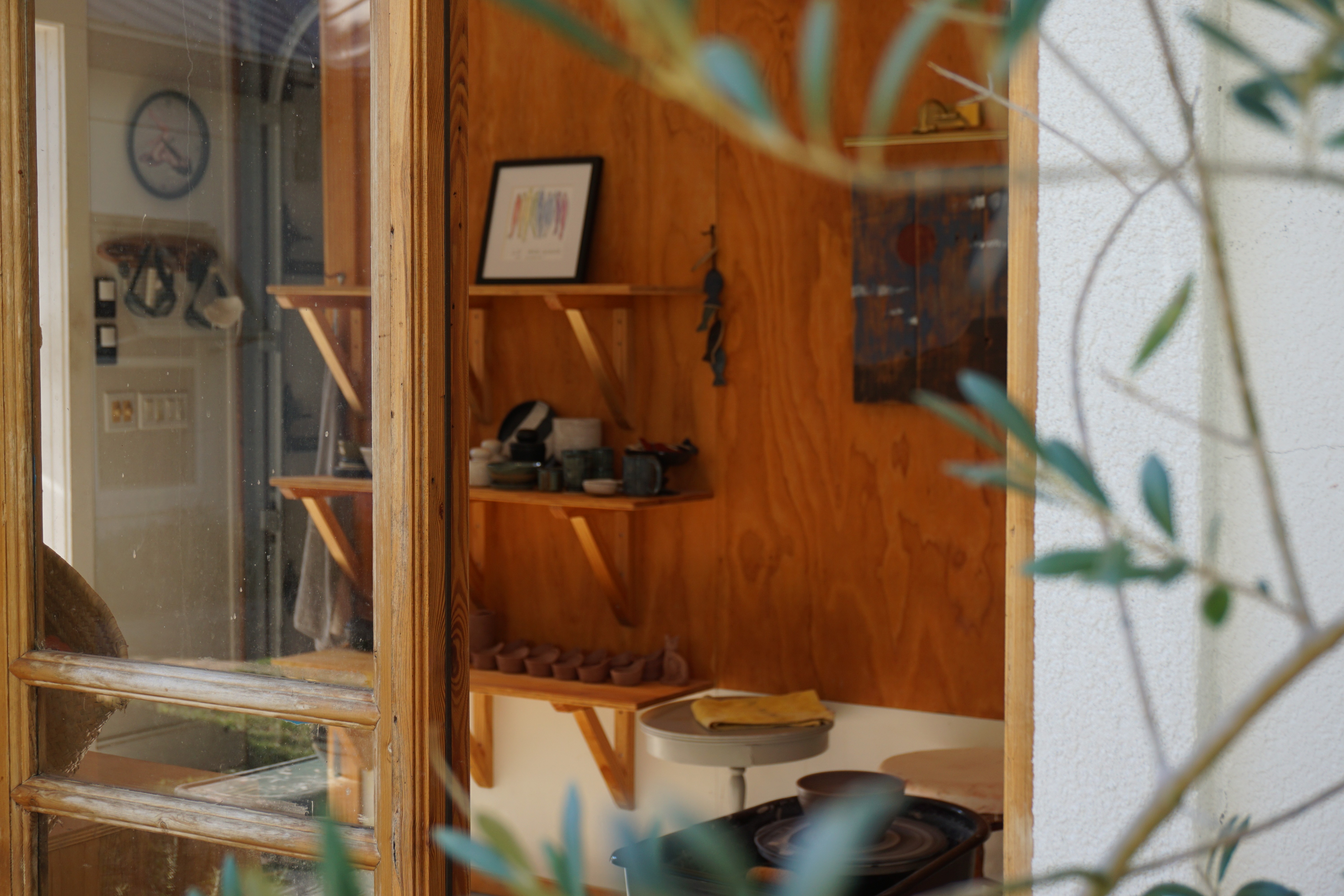
olive branches frame the entrance to Patricia's workspace.
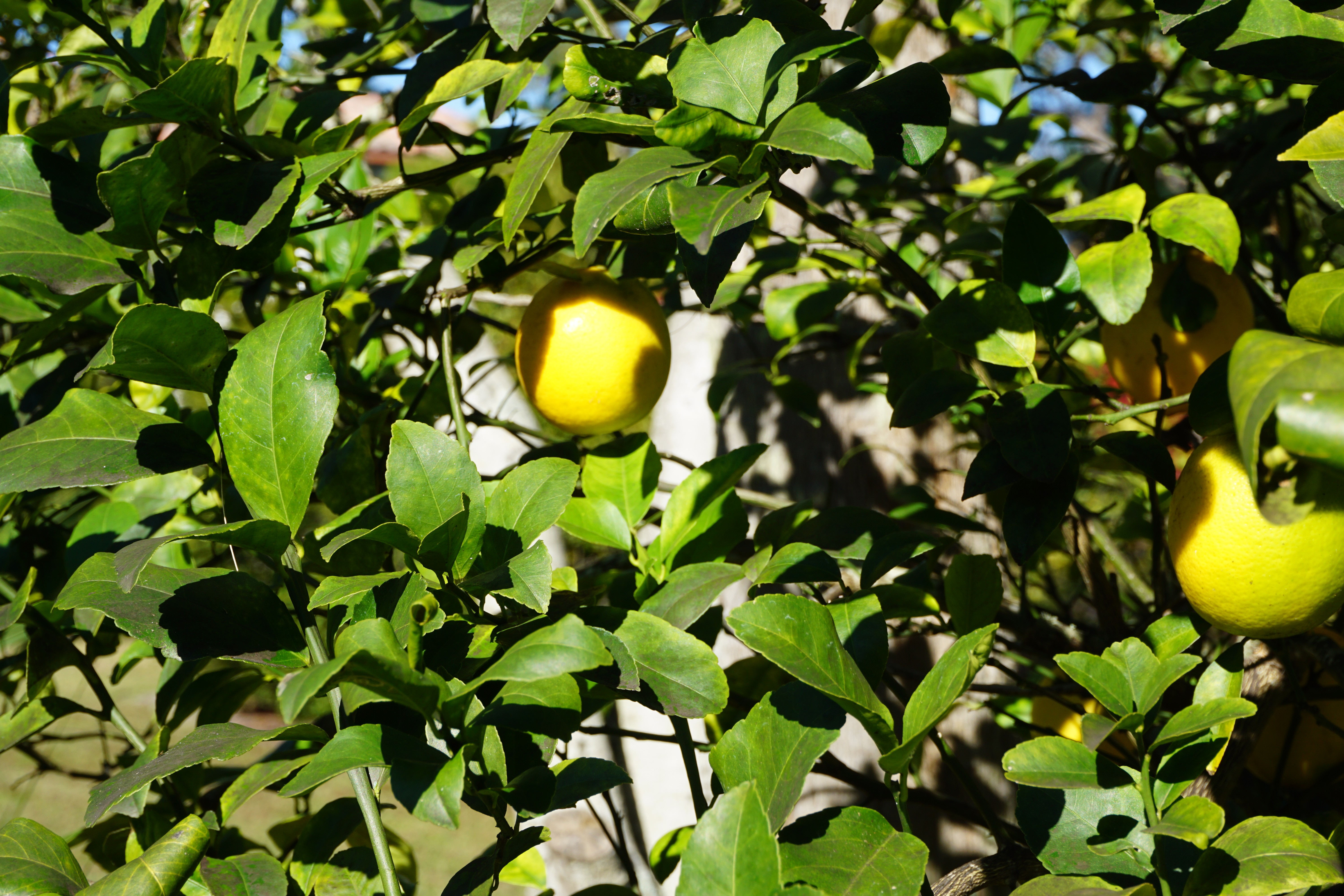
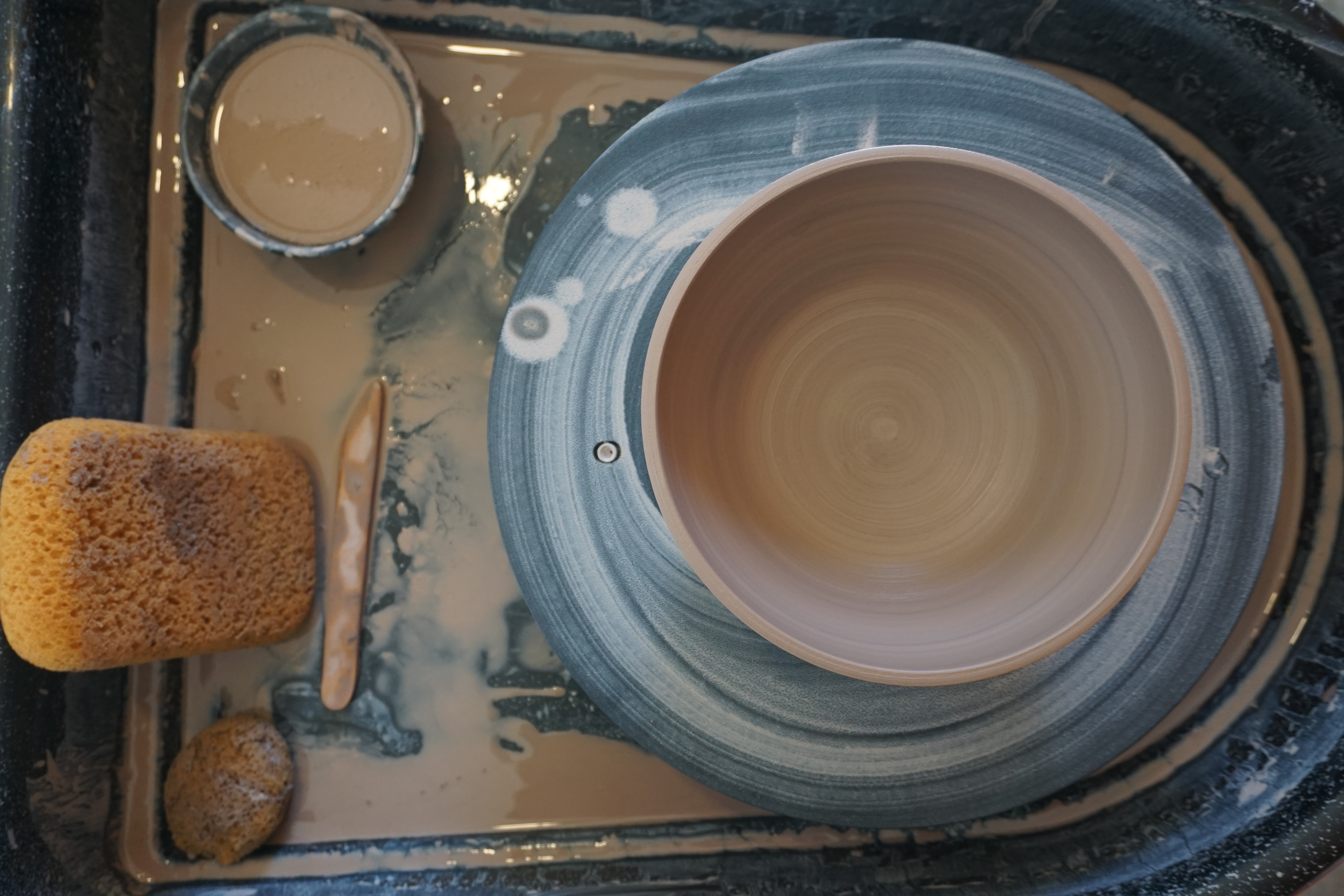
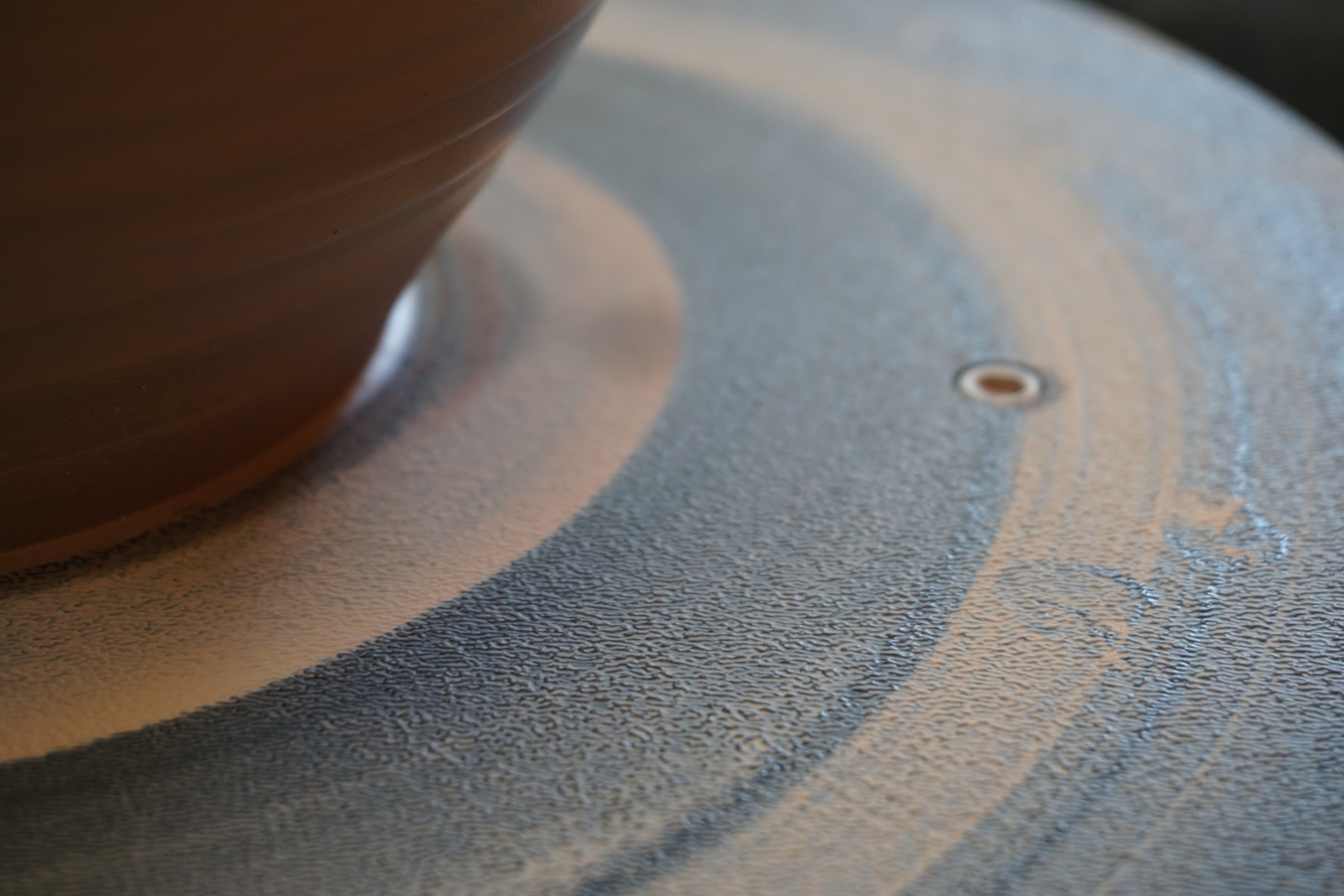
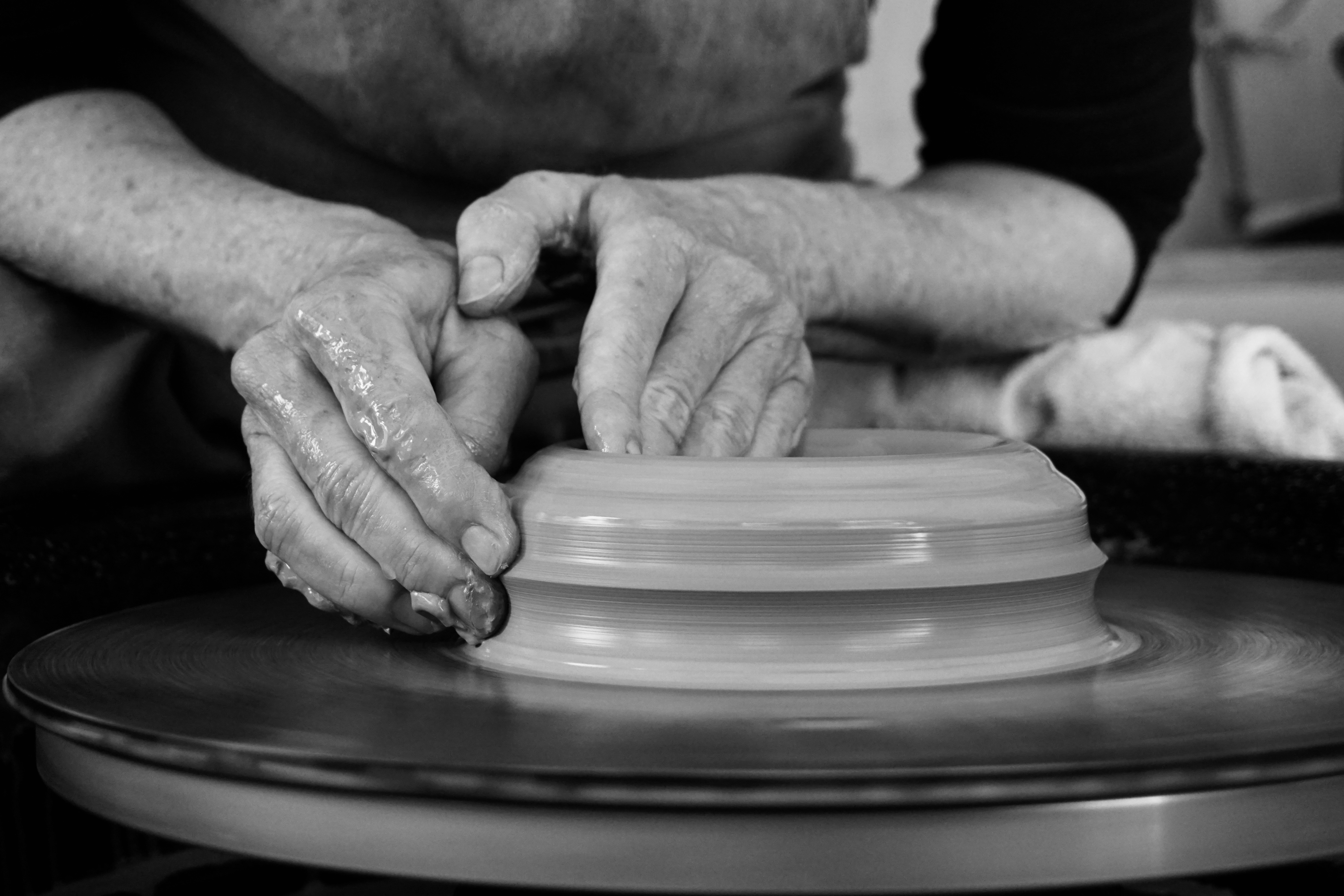
It’s 12:17. The bowl Patricia modeled is drying on the wheel. Turtles are sunbathing on the edge of the water. Skywalker, the gray cat in residence, is resting behind the lemon trees.
It’s 12:17. The bowl Patricia modeled is drying on the wheel. Turtles are sunbathing on the edge of the water. Skywalker, the gray cat in residence, is resting behind the lemon trees.
It’s 12:17. The bowl Patricia modeled is drying on the wheel. Turtles are sunbathing on the edge of the water. Skywalker, the gray cat in residence, is resting behind the lemon trees.
Jordan Sambogna So where are we right now?
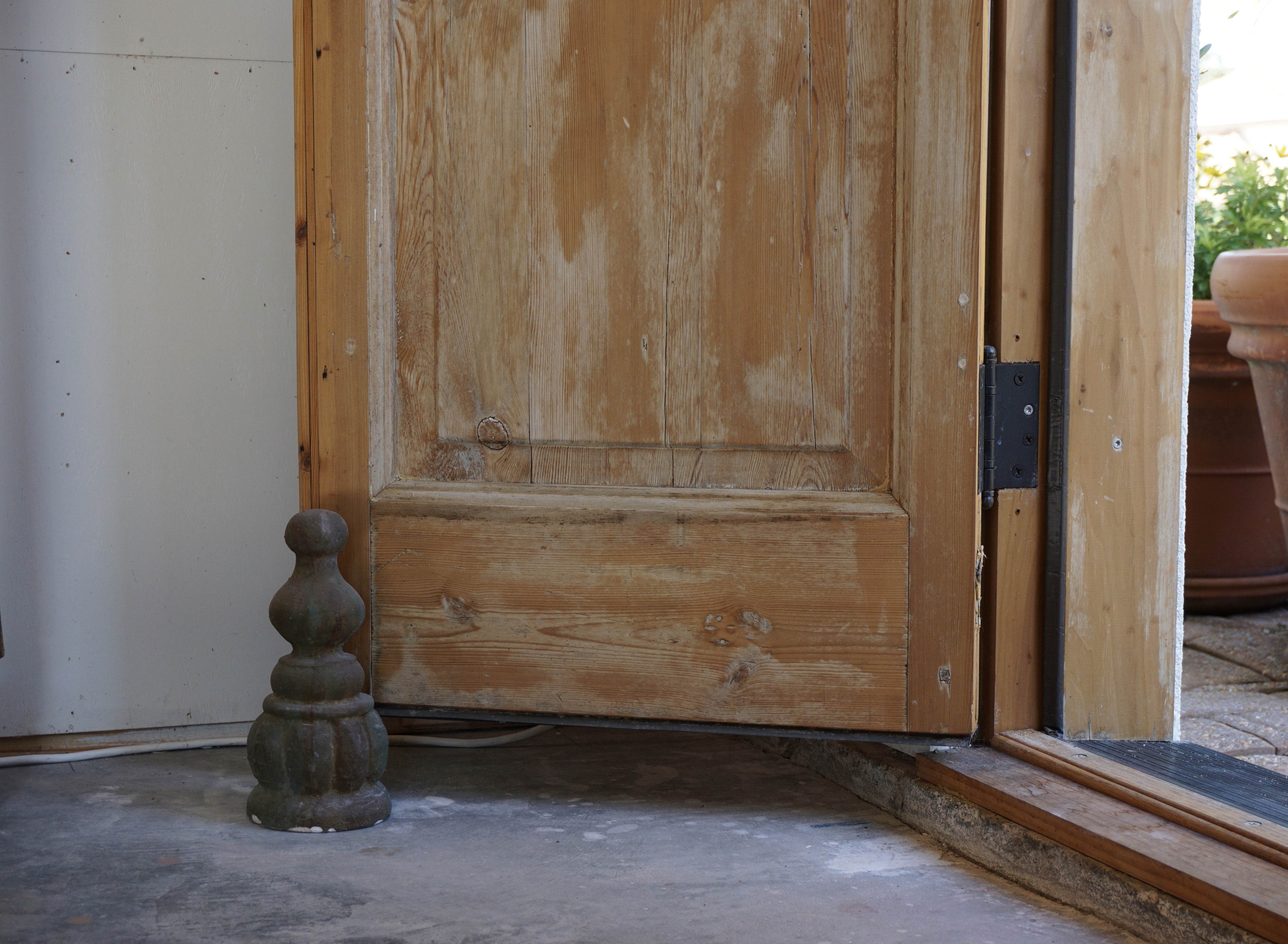
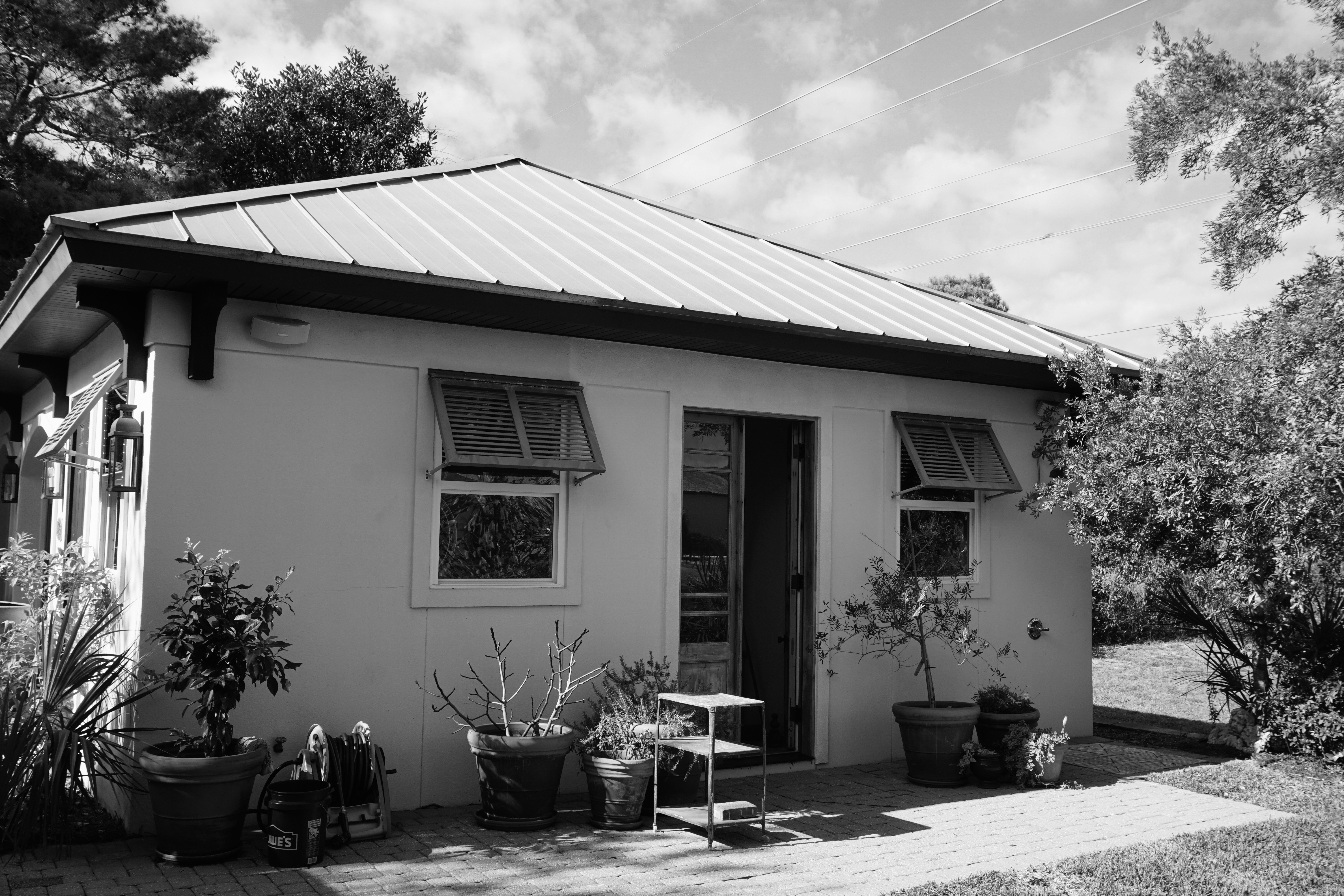
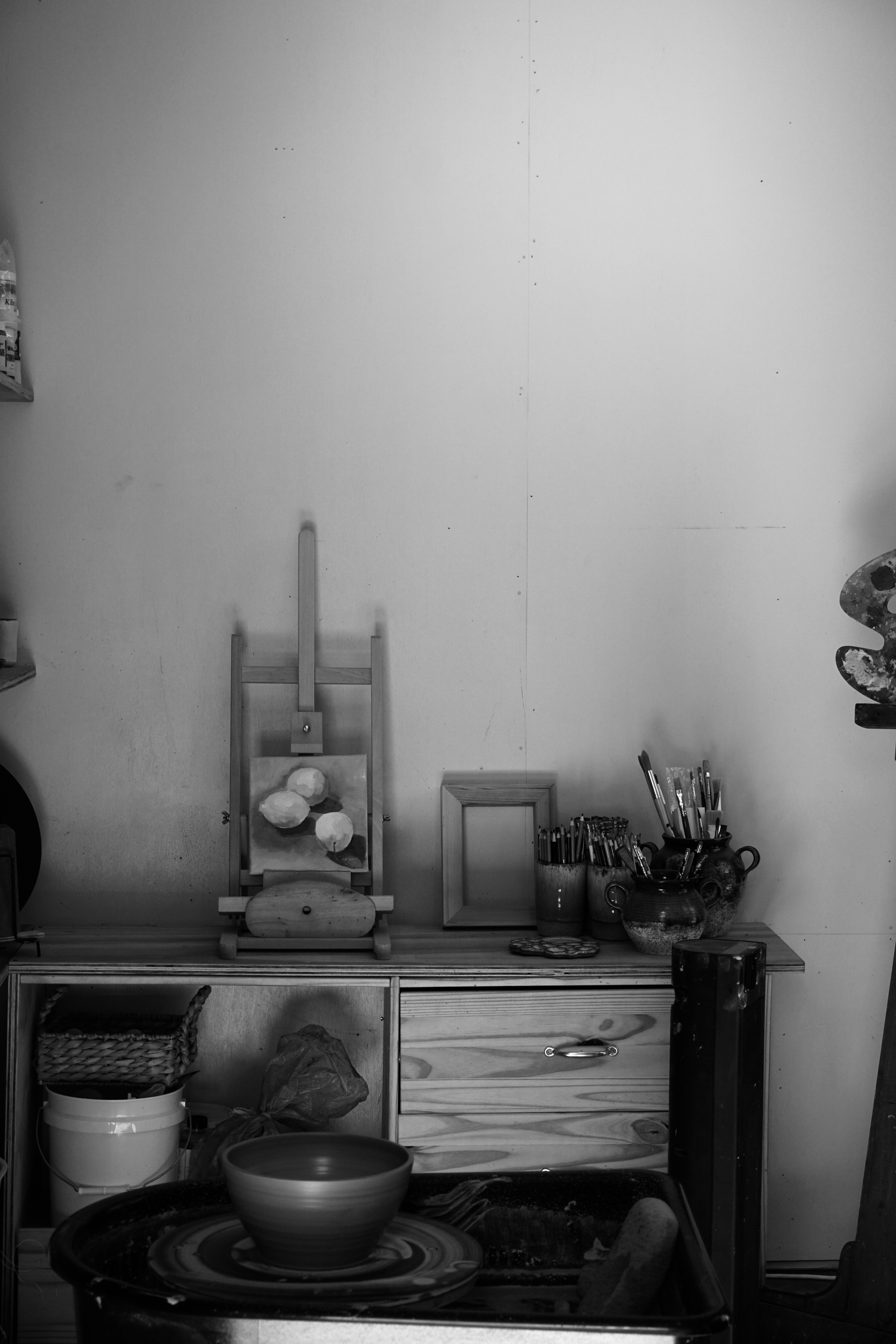
Patricia Hardiman We’re in the garage—or what used to be just the garage. My husband carved this space out for me. Ten, maybe eleven feet by fifteen. We put in antique French doors so I could see the courtyard, the lemon tree, the fountain. I wanted to be able to look out and see a sliver of the lake. My view is important to me.
Jordan Sambogna So where are we right now?
Patricia Hardiman We’re in the garage—or what used to be just the garage. My husband carved this space out for me. Ten, maybe eleven feet by fifteen. We put in antique French doors so I could see the courtyard, the lemon tree, the fountain. I wanted to be able to look out and see a sliver of the lake. My view is important to me.
Jordan Sambogna So where are we right now?
Patricia Hardiman We’re in the garage—or what used to be just the garage. My husband carved this space out for me. Ten, maybe eleven feet by fifteen. We put in antique French doors so I could see the courtyard, the lemon tree, the fountain. I wanted to be able to look out and see a sliver of the lake. My view is important to me.
Inside, the studio is warm with the smell of clay, incense, and the faint trace of whatever Michael—her husband, musician, surfer, fisherman—was doing on his side of the garage earlier that morning. Sometimes he’s cleaning fish. Sometimes he’s tuning a guitar. Sometimes he’s just passing through, barefoot, checking on her progress.
Inside, the studio is warm with the smell of clay, incense, and the faint trace of whatever Michael—her husband, musician, surfer, fisherman—was doing on his side of the garage earlier that morning. Sometimes he’s cleaning fish. Sometimes he’s tuning a guitar. Sometimes he’s just passing through, barefoot, checking on her progress.
Inside, the studio is warm with the smell of clay, incense, and the faint trace of whatever Michael—her husband, musician, surfer, fisherman—was doing on his side of the garage earlier that morning. Sometimes he’s cleaning fish. Sometimes he’s tuning a guitar. Sometimes he’s just passing through, barefoot, checking on her progress.
Jordan Sambogna How is the intersection between both of your workspaces?
Patricia Hardiman Oh, I love it. I didn’t know what it was going to be like.. or smell like. He cleans his fish on his side of the garage. But I love it. He’ll usually have music on, too, and it’s nice because even though there are walls separating us, we talk.
I love to have the doors open. Skywalker comes and goes, and especially if Mike’s in there she’ll come to see if he’s gonna feed her anything fun.
Jordan Sambogna How is the intersection between both of your workspaces?
Patricia Hardiman Oh, I love it. I didn’t know what it was going to be like.. or smell like. He cleans his fish on his side of the garage. But I love it. He’ll usually have music on, too, and it’s nice because even though there are walls separating us, we talk.
I love to have the doors open. Skywalker comes and goes, and especially if Mike’s in there she’ll come to see if he’s gonna feed her anything fun.
Jordan Sambogna How is the intersection between both of your workspaces?
Patricia Hardiman Oh, I love it. I didn’t know what it was going to be like.. or smell like. He cleans his fish on his side of the garage. But I love it. He’ll usually have music on, too, and it’s nice because even though there are walls separating us, we talk.
I love to have the doors open. Skywalker comes and goes, and especially if Mike’s in there she’ll come to see if he’s gonna feed her anything fun.
This is the rhythm of an interconnected environment. All elements tuning in through purposeful action or mere presence. Accidents and ideas emerging hand in hand.
It is a way of being. Good and bad do not exist within this ecosystem. It is the careful act of planting seeds and watching them grow. A boundless realm where messages are received and sent out in various forms across space and time.
This is the rhythm of an interconnected environment. All elements tuning in through purposeful action or mere presence. Accidents and ideas emerging hand in hand.
It is a way of being. Good and bad do not exist within this ecosystem. It is the careful act of planting seeds and watching them grow. A boundless realm where messages are received and sent out in various forms across space and time.
This is the rhythm of an interconnected environment. All elements tuning in through purposeful action or mere presence. Accidents and ideas emerging hand in hand.
It is a way of being. Good and bad do not exist within this ecosystem. It is the careful act of planting seeds and watching them grow. A boundless realm where messages are received and sent out in various forms across space and time.
Jordan Sambogna What happens when you sit down at the wheel?
Patricia Hardiman Usually I turn on music first. Sometimes it’s loud, sometimes soft. And then I can let go. I think that’s one of the things I like about it—it’s a time where I really can get lost in that piece of clay rather than everything else. They say it’s therapeutic, and I think that’s part of it.
Jordan Sambogna What happens when you sit down at the wheel?
Patricia Hardiman Usually I turn on music first. Sometimes it’s loud, sometimes soft. And then I can let go. I think that’s one of the things I like about it—it’s a time where I really can get lost in that piece of clay rather than everything else. They say it’s therapeutic, and I think that’s part of it.
Jordan Sambogna What happens when you sit down at the wheel?
Patricia Hardiman Usually I turn on music first. Sometimes it’s loud, sometimes soft. And then I can let go. I think that’s one of the things I like about it—it’s a time where I really can get lost in that piece of clay rather than everything else. They say it’s therapeutic, and I think that’s part of it.
Jordan Sambogna How long have you been practicing?
Patricia Hardiman I've been practicing consistently for probably three years. I first dabbled in ceramics back in college—that would've been around 1986—when i took a wheel throwing class. Even before that, as a child, I was always drawn to clay. Not play-doh, but real clay for school projects, the kind that hardened. I've always loved the earth and the feel of working with it.
But it wasn't until I took a class at First City in Pensacola a few years ago that I really came back to it. That class reintroduced me to throwing on the wheel, and that's when I started practicing regularly.
Jordan Sambogna How long have you been practicing?
Patricia Hardiman I've been practicing consistently for probably three years. I first dabbled in ceramics back in college—that would've been around 1986—when i took a wheel throwing class. Even before that, as a child, I was always drawn to clay. Not play-doh, but real clay for school projects, the kind that hardened. I've always loved the earth and the feel of working with it.
But it wasn't until I took a class at First City in Pensacola a few years ago that I really came back to it. That class reintroduced me to throwing on the wheel, and that's when I started practicing regularly.
Jordan Sambogna How long have you been practicing?
Patricia Hardiman I've been practicing consistently for probably three years. I first dabbled in ceramics back in college—that would've been around 1986—when i took a wheel throwing class. Even before that, as a child, I was always drawn to clay. Not play-doh, but real clay for school projects, the kind that hardened. I've always loved the earth and the feel of working with it.
But it wasn't until I took a class at First City in Pensacola a few years ago that I really came back to it. That class reintroduced me to throwing on the wheel, and that's when I started practicing regularly.
The practice is not without chaos. Hair caught in the wheel, clay flying, ceramic birds exploding in the kiln. “You open the kiln and you’re always hoping,” Patricia says. “Nothing’s a sure thing. You’ll see cracks, or the bird blew up.”
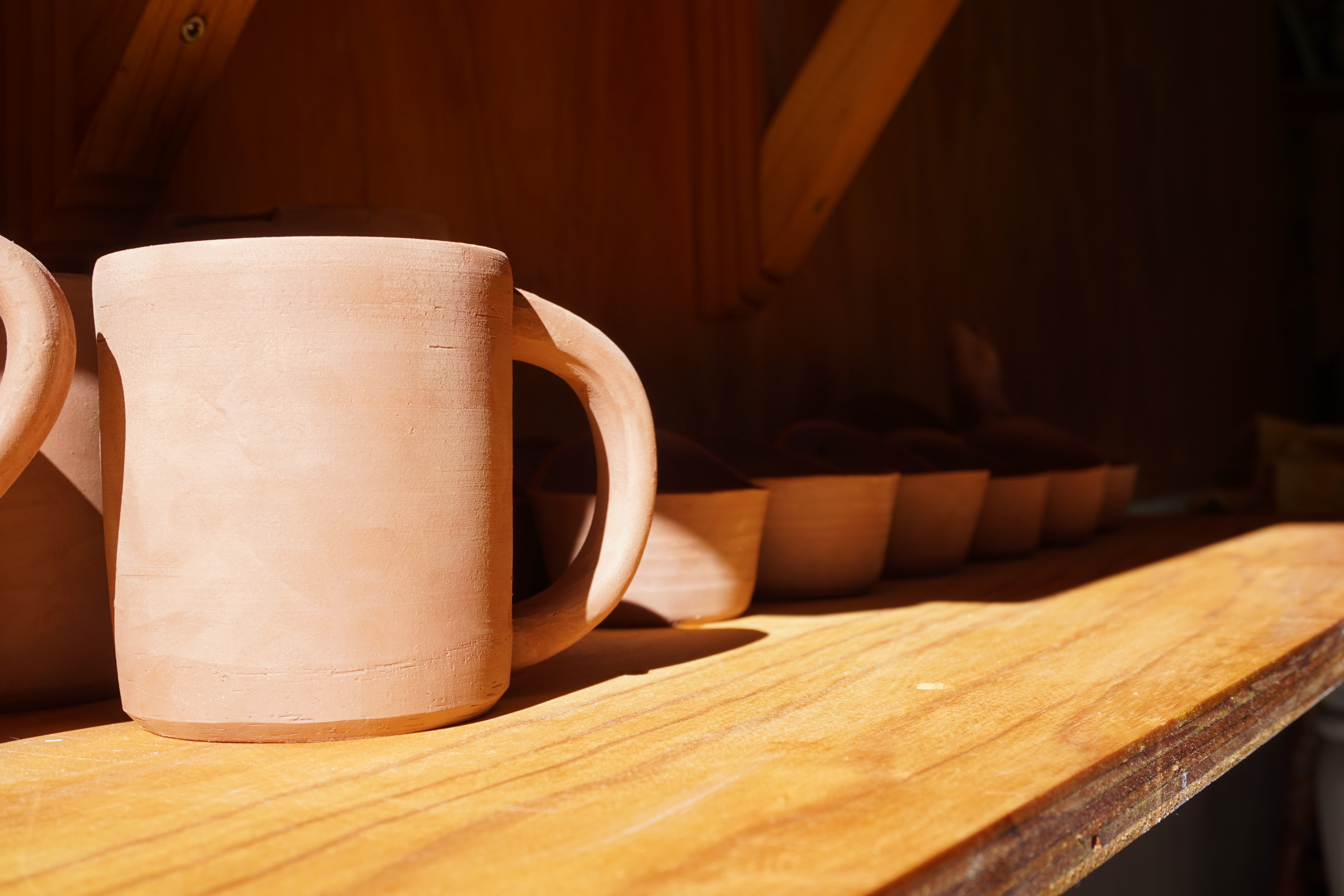
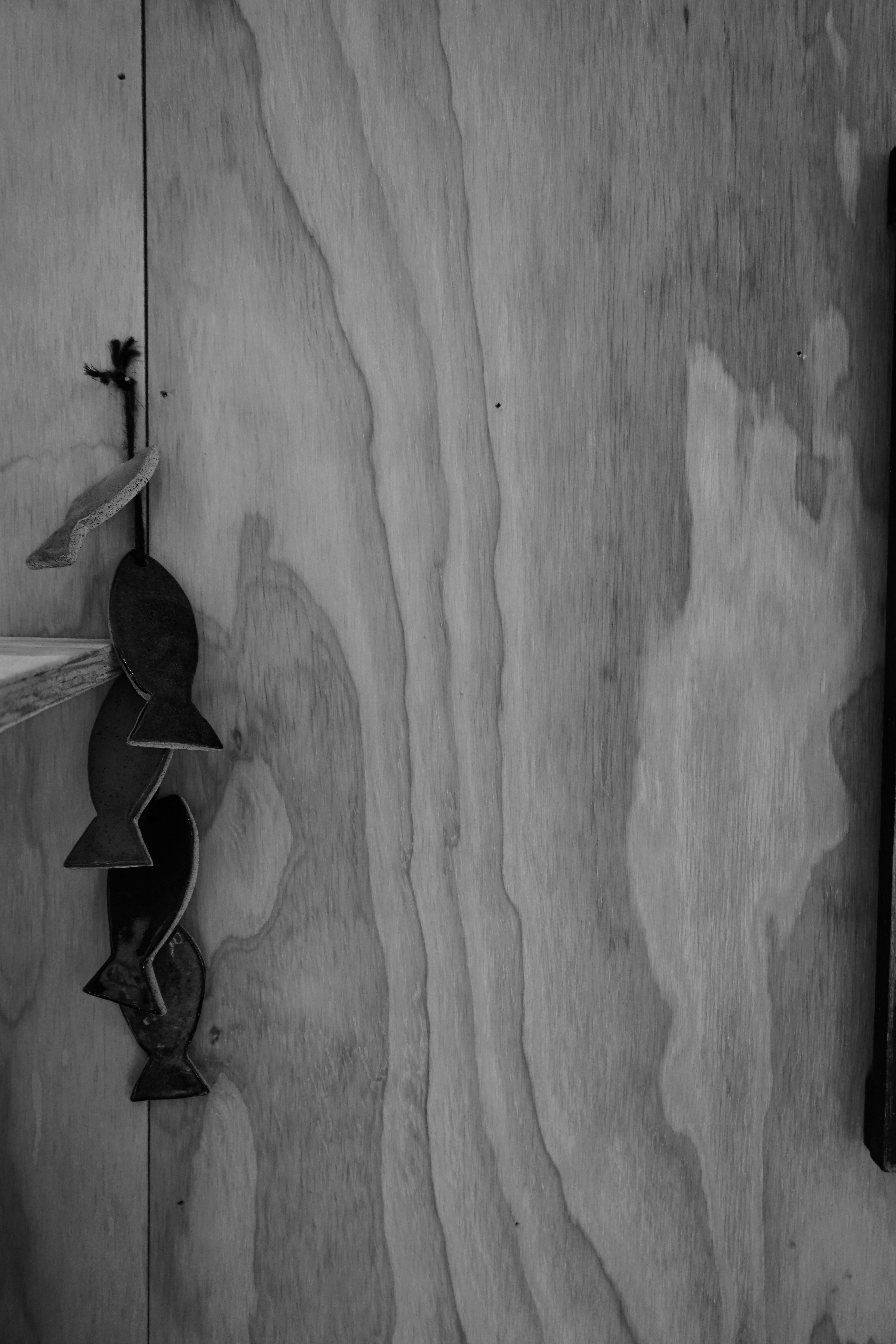
And yet, from this unpredictability emerges the quiet form: a mug held to the chest, a bowl placed on the table, a bird bath resting in the garden. Each piece has survived an immense journey to creation.
The practice is not without chaos. Hair caught in the wheel, clay flying, ceramic birds exploding in the kiln. “You open the kiln and you’re always hoping,” Patricia says. “Nothing’s a sure thing. You’ll see cracks, or the bird blew up.”
And yet, from this unpredictability emerges the quiet form: a mug held to the chest, a bowl placed on the table, a bird bath resting in the garden. Each piece has survived an immense journey to creation.
The practice is not without chaos. Hair caught in the wheel, clay flying, ceramic birds exploding in the kiln. “You open the kiln and you’re always hoping,” Patricia says. “Nothing’s a sure thing. You’ll see cracks, or the bird blew up.”
And yet, from this unpredictability emerges the quiet form: a mug held to the chest, a bowl placed on the table, a bird bath resting in the garden. Each piece has survived an immense journey to creation.
Jordan Sambogna is there a type of clay you generally use?
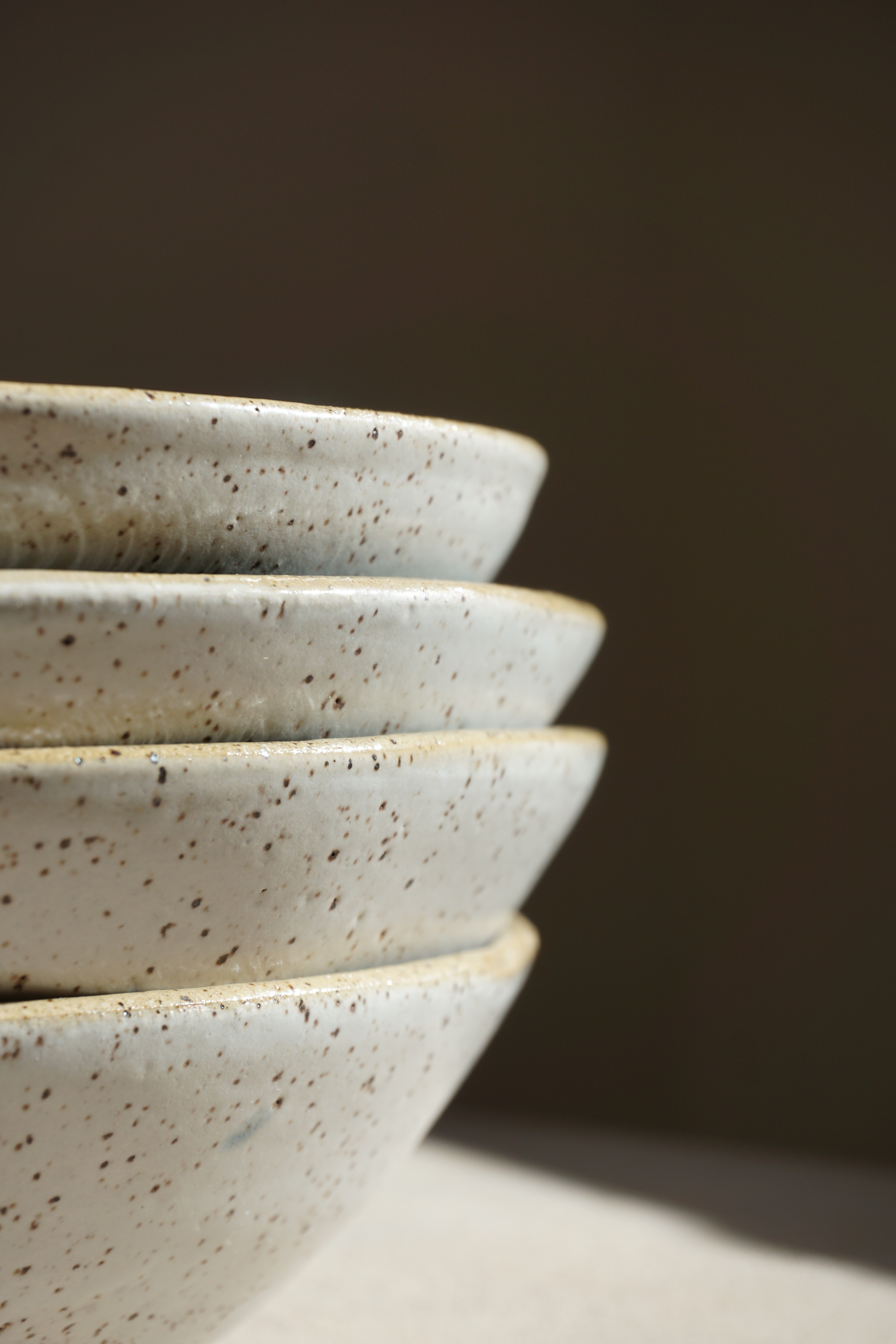
Patricia Hardiman I use different clay bodies. I've liked every one I've tried, and there are so many out there—each with its own temperament. Most of what I use is stoneware. Some have grog, which gives them texture; others are smooth and white, almost like porcelain. I haven't thrown actual porcelain yet, but there's a clay body that feels similar. One of my favorites to throw is a grogged clay that has a natural, speckled look.
But, I really love experimenting with different clays.
Jordan Sambogna What initially drew you into ceramics?
Patricia Hardiman My mother is the one who introduced me to clay and really to art. She had me in art classes when I was a child—mostly drawing classes. She would go and get clay for me to do projects and once she did, I started playing with it. I'm just drawn to it more. I love to draw. Painting, I like, but the actual working with clay I found much more fulfilling. And just kind of getting my hands dirty and building creating something…
Jordan Sambogna and where do your ideas come from?
Patricia Hardiman People ask for things. Mostly family. Your mother sent me a picture of a bird bath she liked, and I said, I’ll do my version of it. I don’t want to copy. I sketch things in a notebook. I write things down because I’ll forget what I did. Sometimes I just sit and practice—pulling, shaping—because the beauty of this art form is you can mess up and start over.
Jordan Sambogna is there a type of clay you generally use?
Patricia Hardiman I use different clay bodies. I've liked every one I've tried, and there are so many out there—each with its own temperament. Most of what I use is stoneware. Some have grog, which gives them texture; others are smooth and white, almost like porcelain. I haven't thrown actual porcelain yet, but there's a clay body that feels similar. One of my favorites to throw is a grogged clay that has a natural, speckled look.
But, I really love experimenting with different clays.
Jordan Sambogna What initially drew you into ceramics?
Patricia Hardiman My mother is the one who introduced me to clay and really to art. She had me in art classes when I was a child—mostly drawing classes. She would go and get clay for me to do projects and once she did, I started playing with it. I'm just drawn to it more. I love to draw. Painting, I like, but the actual working with clay I found much more fulfilling. And just kind of getting my hands dirty and building creating something…
Jordan Sambogna and where do your ideas come from?
Patricia Hardiman People ask for things. Mostly family. Your mother sent me a picture of a bird bath she liked, and I said, I’ll do my version of it. I don’t want to copy. I sketch things in a notebook. I write things down because I’ll forget what I did. Sometimes I just sit and practice—pulling, shaping—because the beauty of this art form is you can mess up and start over.
Jordan Sambogna is there a type of clay you generally use?
Patricia Hardiman I use different clay bodies. I've liked every one I've tried, and there are so many out there—each with its own temperament. Most of what I use is stoneware. Some have grog, which gives them texture; others are smooth and white, almost like porcelain. I haven't thrown actual porcelain yet, but there's a clay body that feels similar. One of my favorites to throw is a grogged clay that has a natural, speckled look.
But, I really love experimenting with different clays.
Jordan Sambogna What initially drew you into ceramics?
Patricia Hardiman My mother is the one who introduced me to clay and really to art. She had me in art classes when I was a child—mostly drawing classes. She would go and get clay for me to do projects and once she did, I started playing with it. I'm just drawn to it more. I love to draw. Painting, I like, but the actual working with clay I found much more fulfilling. And just kind of getting my hands dirty and building creating something…
Jordan Sambogna and where do your ideas come from?
Patricia Hardiman People ask for things. Mostly family. Your mother sent me a picture of a bird bath she liked, and I said, I’ll do my version of it. I don’t want to copy. I sketch things in a notebook. I write things down because I’ll forget what I did. Sometimes I just sit and practice—pulling, shaping—because the beauty of this art form is you can mess up and start over.
She saves every scrap. Dry and wet pieces go into a bucket to be reclaimed later. Nothing is wasted.
She keeps a logbook of everything she does for each session. Every bisque fire. Every greenware that flew across the room. Writing things down—all the moments of gladness and upset—is part of the ritual.
Her daughter Whitley, an architect, often requests pieces with precise dimensions. Patricia always accepts the challenge. She also draws inspiration from turned wooden objects, from textures in nature, from glazes that break from green to blue over an edge.
But glaze is also her greatest frustration.
She saves every scrap. Dry and wet pieces go into a bucket to be reclaimed later. Nothing is wasted.
She keeps a logbook of everything she does for each session. Every bisque fire. Every greenware that flew across the room. Writing things down—all the moments of gladness and upset—is part of the ritual.
Her daughter Whitley, an architect, often requests pieces with precise dimensions. Patricia always accepts the challenge. She also draws inspiration from turned wooden objects, from textures in nature, from glazes that break from green to blue over an edge.
But glaze is also her greatest frustration.
She saves every scrap. Dry and wet pieces go into a bucket to be reclaimed later. Nothing is wasted.
She keeps a logbook of everything she does for each session. Every bisque fire. Every greenware that flew across the room. Writing things down—all the moments of gladness and upset—is part of the ritual.
Her daughter Whitley, an architect, often requests pieces with precise dimensions. Patricia always accepts the challenge. She also draws inspiration from turned wooden objects, from textures in nature, from glazes that break from green to blue over an edge.
But glaze is also her greatest frustration.
Jordan Sambogna What is the most challenging part for you?
Patricia Hardiman Glazing. I have a vision in my head, and the glaze doesn’t always match it. I probably need to learn more of the chemistry and start mixing my own, because buying pre‑made glazes can be frustrating—they don’t always fire the way, I hope. It reminds me of drawing: I could draw almost anything, but when I tried to paint it, I didn’t have the experience, and I felt like I ruined it. Pottery can feel the same. I might love the form I’ve made, but once it’s glazed, if it doesn’t turn out right, I just want to throw it away.
Centering larger amounts of clay is also still a challenge. The heavier the clay, the harder it is to get it perfectly centered. And if it’s not centered, the whole piece will wobble or warp. Sometimes potters do that intentionally, but you can tell when it wasn’t meant to be that way. I once read that centering clay is like centering life—everything depends on that balance.
Jordan Sambogna What is the most challenging part for you?
Patricia Hardiman Glazing. I have a vision in my head, and the glaze doesn’t always match it. I probably need to learn more of the chemistry and start mixing my own, because buying pre‑made glazes can be frustrating—they don’t always fire the way, I hope. It reminds me of drawing: I could draw almost anything, but when I tried to paint it, I didn’t have the experience, and I felt like I ruined it. Pottery can feel the same. I might love the form I’ve made, but once it’s glazed, if it doesn’t turn out right, I just want to throw it away.
Centering larger amounts of clay is also still a challenge. The heavier the clay, the harder it is to get it perfectly centered. And if it’s not centered, the whole piece will wobble or warp. Sometimes potters do that intentionally, but you can tell when it wasn’t meant to be that way. I once read that centering clay is like centering life—everything depends on that balance.
Jordan Sambogna What is the most challenging part for you?
Patricia Hardiman Glazing. I have a vision in my head, and the glaze doesn’t always match it. I probably need to learn more of the chemistry and start mixing my own, because buying pre‑made glazes can be frustrating—they don’t always fire the way, I hope. It reminds me of drawing: I could draw almost anything, but when I tried to paint it, I didn’t have the experience, and I felt like I ruined it. Pottery can feel the same. I might love the form I’ve made, but once it’s glazed, if it doesn’t turn out right, I just want to throw it away.
Centering larger amounts of clay is also still a challenge. The heavier the clay, the harder it is to get it perfectly centered. And if it’s not centered, the whole piece will wobble or warp. Sometimes potters do that intentionally, but you can tell when it wasn’t meant to be that way. I once read that centering clay is like centering life—everything depends on that balance.
Surprise is part of the ritual. So is acceptance. So is messiness.
Surprise is part of the ritual. So is acceptance. So is messiness.
Surprise is part of the ritual. So is acceptance. So is messiness.
Jordan Sambogna If you could describe your practice in one word what would it be?
Patricia Hardiman The first word that comes to mind is joy…. I was going to say healing, but that’s going to make me cry.
Jordan Sambogna If you could describe your practice in one word what would it be?
Patricia Hardiman The first word that comes to mind is joy…. I was going to say healing, but that’s going to make me cry.
Jordan Sambogna If you could describe your practice in one word what would it be?
Patricia Hardiman The first word that comes to mind is joy…. I was going to say healing, but that’s going to make me cry.
Here, in situ, the practice is both fragile and resilient. Clay is wedged, thrown, trimmed, reclaimed. Pieces crack, birds explode, glazes disappoint. And yet, the fountain keeps running, the lemon tree keeps growing, the cat keeps wandering in and out.
Patricia’s ceramics live in this dance of give and take—trust and fall.
Here, in situ, the practice is both fragile and resilient. Clay is wedged, thrown, trimmed, reclaimed. Pieces crack, birds explode, glazes disappoint. And yet, the fountain keeps running, the lemon tree keeps growing, the cat keeps wandering in and out.
Patricia’s ceramics live in this dance of give and take—trust and fall.
Here, in situ, the practice is both fragile and resilient. Clay is wedged, thrown, trimmed, reclaimed. Pieces crack, birds explode, glazes disappoint. And yet, the fountain keeps running, the lemon tree keeps growing, the cat keeps wandering in and out.
Patricia’s ceramics live in this dance of give and take—trust and fall.